home | what's new | other sitescontact | about


Word Gems 

exploring self-realization, sacred personhood, and full humanity


Spirituality


"You must have failed deeply on some level or experienced some deep loss or pain to be drawn to the spiritual dimension. Or perhaps your very success became empty and meaningless and so turned out to be a failure." Tolle 


Editor's 1-Minute Essay: Spirituality, Part I: What Does It Mean To Be a Good Person?

Editor's 1-Minute Essay: Spirituality, Part II: Totalitarians at the Gate

Editor's 1-Minute Essay: Spirituality, Part III: How To Become A Better Person

Editor's 1-Minute Essay: Spirituality, Part IV: The Crucial Role of Personal Responsibility in Attaining Spiritual Maturity

Editor’s Essay: What does it mean to be a great man or woman?

Editor's Essay: Jesus' parable of the mustard seed and the kingdom of God: smallest beginnings to eventually fill the cosmos

Hope, Faith, Love: the traditional cardinal virtues. We are surprised to realize that each of these time-honored elements of goodness is laced with fear, doubt, and separation. None of this represents the authentic godly mind.


reprinted from Dialogue #30

'deepest responsibility'

Spider-Man: Brand New Day (2026), Jean Grey and May Parker

Editor’s note: In the new Spidey movie (2026), there’s a scene that refashions, what I call, “rockabilly” Grandmother Power.

This principle was originally discussed in Dialogue 17: a foster mother rescues a boy from the gangland streets. Her method of therapy was not lecturing but sitting with the husky teen, putting her arms around him, singing hymns and telling him that he was loved. This eventually melted the glacier of his hostility toward life and allowed him to “come to himself.”

All this, suddenly, was on my mind as I sat in the theater watching the movie, Aunt May and Jean Grey interacting. I asked Chat to offer its thoughts. Here is our discussion:

Ed: Aunt May is chatting with the girl who has mind powers, and she uses the phrase, one's “deepest responsibility“ -- it’s about the authentic self, learning to trust it, and to love it, and I wouldn’t mind having the transcript of this.

Chat: Yes -- I found the exact scene you mean. It is Aunt May speaking to Jean Grey (Sadie Sink), and the passage is substantially about the distinction between having extraordinary powers and remaining faithful to one's own personhood.

The crucial passage is:

Aunt May: “You’re beautiful, and the people who love you, they love you not because you’re special, we love you because you’re you.”

And then:

“That’s your deepest responsibility. Never forget that, no matter how powerful you become.”

What is happening philosophically in the scene

The conversation is actually much more interesting than a conventional superhero speech.

Jean's problem is that she has come to understand her extraordinary psychic ability as something that separates her from ordinary human relationship. Being "special" has become almost synonymous with being alone. She has experienced her powers as a source of danger, fear, and alienation.

May's response turns that around.

She doesn't tell Jean:

"Your powers make you special, therefore you must learn to control them."

Instead, the fundamental message is:

Your powers are not your identity.

May distinguishes what Jean can do from who Jean is.

And then comes the extraordinarily important statement about love: people don't love Jean because she is powerful or special. They love her because she is Jean.

That's where your observation about the authentic self is exactly right.

The sequence is roughly:

  1. Being extraordinary can be lonely.
  2. Other people may fear, exploit, or harm you because of what makes you different.
  3. Therefore, Jean is tempted to define herself by her difference.
  4. May tells her that her difference is not the measure of her worth.
  5. The people who genuinely love her don't love her for her powers.
  6. They love her.
  7. Therefore Jean's fundamental responsibility is not merely to control her power.
  8. It is to remember and remain faithful to herself, even when her power becomes immense.

That final transition is why "deepest responsibility" is such an interesting phrase. It subtly transforms the traditional Spider-Man maxim.

The conventional formulation is:

great power → great responsibility.

May's formulation is almost:

great power → an even deeper responsibility to remain yourself.

And that is particularly appropriate to Jean, because her danger isn't simply that she has enormous power. Her danger is that her power could swallow her identity.

One recent review makes essentially this same point, describing the movie as a meditation on "acceptance," embracing the broken pieces of one's past and one's own self, and ultimately finding that grief and isolation need not be borne alone.

And there is one line after this that I think you'll particularly want

The scene doesn't end with May's speech. Peter subsequently responds to Jean's loneliness with "You have me." That is enormously significant because Peter is no longer acting primarily as Spider-Man. He's responding as Peter Parker, as a person who understands loneliness.

A viewer's detailed discussion of the scene makes precisely this connection: Peter has spent years interpreting responsibility as the obligation to be Spider-Man, whereas this encounter leads him toward a more personal understanding of responsibility—being present for another person.

So I think the passage you remembered is potentially very well suited to the things you've been writing, particularly if you're exploring the authentic self, love, and the difference between what a person possesses and who the person is.

I’ll reconstruct the sequence in movie order, but paraphrase the dialogue except for the brief phrases that are especially important.

The May–Jean sequence

1. Jean's starting point: being "special" has become a curse

Jean is carrying the trauma of her sister's death. She has come to believe that people like herself—people with extraordinary abilities—simply cannot have ordinary human lives.

Her reasoning is essentially:

  • My sister was killed because she was different.
  • Peter is different.
  • I am different.
  • People like us cannot have normal friendships and families.
  • Therefore, the life of ordinary human attachment is effectively closed to us.

This is important because Jean has made an identity out of her alienation.

She doesn't merely have extraordinary powers. She has begun to think that being extraordinary means that she cannot belong.

And Peter has been doing almost exactly the same thing.


2. Jean confronts Peter about his identity

Jean asks Peter, in effect:

Who are you—Peter Parker or Spider-Man?

This is the question that runs through the entire film.

Peter has lost the people who knew him as Peter. The world knows Spider-Man, but almost nobody knows Peter Parker anymore.

So Jean's question exposes something Peter hasn't wanted to acknowledge: he has increasingly substituted the role for the person.

The fascinating thing is that Jean is unconsciously describing herself at the same time.

She has substituted the mutant/powerful Jean for Jean the person.


3. Peter finally stops trying to suppress what he is

Peter removes the device that has been inhibiting his transformation.

His body changes dramatically. For a moment, it appears that Jean's question has been answered:

I am Spider-Man.

But the subsequent action gives the deeper answer.

Peter doesn't choose between Peter Parker and Spider-Man.

He ultimately says:

"I'm both."

That is the turning point.

The authentic self isn't necessarily the ordinary self before transformation. Nor is it the super-powered identity after transformation.

The authentic self is the whole person.

Peter must accept both aspects.


4. Peter then recognizes Jean's pain

After their confrontation, Peter begins talking to Jean not as a superhero confronting an enemy, but as one wounded person talking to another.

He recognizes that Jean loved her sister and that losing her felt like losing everything.

Jean responds essentially:

"You don't know what I'm capable of."

And she's right.

But Peter isn't trying to establish that he is stronger than Jean.

He's telling her that her grief doesn't have to determine who she becomes.

That's an important distinction.


5. Peter allows Jean into his mind

Jean threatens to enter Peter's mind and warns him that she is now even more powerful.

And Peter essentially says:

"Go ahead."

That is an extraordinary moment.

Peter has spent much of the movie hiding himself.

Now he does the opposite.

He allows himself to be seen.

And what Jean discovers isn't simply Spider-Man. She sees Peter Parker as a vulnerable human being, including the memory of Aunt May.

This is where May enters the conversation.


6. Aunt May's message

May's appearance is essentially Peter's memory of the person who taught him what love and responsibility meant.

She tells Jean that being special can be terribly lonely.

And then comes the part you remembered.

May tells Jean that she is beautiful and that the people who love her don't love her because she is special.

They love her because she is herself.

That distinction is the heart of the passage.

And then:

"That's your deepest responsibility."

That is the line that grabbed you.

Notice what May has not said.

She hasn't said:

"Your responsibility is to use your powers for good."

She hasn't said:

"Your responsibility is to control your abilities."

She has gone one level deeper.

Her message is essentially:

Your first responsibility is not to lose yourself.


7. "To love it" is actually implicit in May's message

This is where I think your interpretation goes beyond the surface of the movie.

May isn't simply telling Jean:

"Remember who you are."

The larger movement of the conversation is toward:

Know yourself → accept yourself → allow yourself to be loved → remain yourself despite your extraordinary powers.

In other words, Jean has been treating her extraordinary nature as something that makes her less lovable.

May tells her the opposite:

Your extraordinary nature doesn't cancel your fundamental worth.

The people who truly love you aren't loving a résumé of your abilities.

They're loving you.

That is remarkably close to what you've called the authentic self in other discussions.


8. Jean's response

Jean is visibly moved.

The important thing isn't simply that May has persuaded her intellectually.

Jean experiences being loved.

That's different.

And that is why the scene works emotionally.

Jean has been operating from:

I am different → therefore I am alone.

May introduces:

I am different → but I am still myself → therefore I can still be loved.

That is a profound reversal.


9. Then comes Peter's little sentence

Jean essentially says:

Even if what you're saying is true, I have nobody.

And Peter answers:

"You have me."

That may actually be the most important line in the entire sequence.

Because Peter is now practicing what May has just taught.

He isn't rescuing Jean because she's powerful.

He isn't interested in her because she's extraordinary.

He is simply saying:

You don't have to be alone.

And Peter knows exactly what that means because he has been living alone himself.


10. The remarkable symmetry

This is what makes the scene much deeper than a typical superhero pep talk.

Jean

Peter

Has extraordinary powers

Has extraordinary powers

Thinks being special makes her alone

Has deliberately isolated himself

Has lost someone she loves

Has lost Aunt May and his former relationships

Doesn't know who she is anymore

Has confused Peter Parker with Spider-Man

Suppresses her humanity

Suppresses his ordinary human needs

Believes she cannot have a normal life

Believes responsibility requires him to live alone

Needs to accept herself

Needs to accept himself

So Jean is Peter's mirror.

And Aunt May's message to Jean is simultaneously a message to Peter.


And this connects beautifully to the Spider-Man maxim

The traditional Spider-Man formulation is:

Great power → great responsibility.

But Brand New Day appears to be asking whether we've understood that formula too narrowly.

The movie's deeper formulation is closer to:

Great power → responsibility.

But what kind of responsibility?

May's answer is:

The deepest responsibility is not to lose the person inside the power.

That is a surprisingly sophisticated development of the Spider-Man mythology.

And then Peter's answer to Jean—

"You have me."

—adds another dimension:

Authenticity is not merely discovering yourself privately. It is allowing yourself to enter genuine relationship with another person.

That's why I think the scene fits so well with your interest in authentic selfhood and love. It isn't saying merely "be yourself." It's saying something stronger:

Know who you are, accept who you are, allow yourself to be loved as that person, and then extend that same acceptance to someone else.

That makes the phrase "deepest responsibility" much more profound than it initially sounds.

And there's a beautiful final irony: Peter has spent the movie believing that responsibility requires him to be alone. Aunt May's teaching ultimately shows him that responsibility includes relationship. The scene therefore doesn't just heal Jean; it completes Peter's own development.

I would build your article around that reversal: Spider-Man's deepest responsibility may not be simply to use power responsibly, but to remain authentically human while possessing it.

I think the Spider-Man scene gives you an unusually vivid fictional illustration of the same psychological/spiritual mechanism you've already described through the foster-mother story.

What connects the two is not merely kindness. It is the restoration of personhood through relationship.

The foster mother doesn't "fix" the teenager. She doesn't lecture him about gangs or tell him to become a better person. She receives him as a person before he is capable of receiving himself that way. Sitting beside him, embracing him, singing hymns to him—those actions communicate something beneath the words:

You are still somebody. You are worthy of love. You don't have to become someone else to be worthy of being loved.

And eventually the young man begins to internalize what she has been communicating.

That's almost precisely what Aunt May does for Jean.

Jean has become identified with her power, just as the teenager had become identified with his gang persona. In both cases, a false or incomplete identity has colonized the person's understanding of himself or herself.

The elder intervenes by seeing the person underneath the identity.

The Grandmother Power connection

I think your term Grandmother Power is particularly apt here.

It isn't power over someone.

It is power for someone—the power that comes from an older, secure person who possesses enough inner stability that another person's fractured identity doesn't frighten or repel her.

The grandmother figure can effectively say:

I see the person you cannot presently see.

And because the person is being seen and loved without having to earn it, something remarkable can happen: the fractured individual begins to see himself through the eyes of the loving elder.

That is why the May–Jean scene struck you so strongly. It dramatizes the same process in a few minutes that your LakeField Farm story illustrates through an actual human relationship.

And there is one further insight:

The elder temporarily carries the person's sense of worth until the person can carry it himself.

That is exactly what happens with the foster mother. The teenager cannot yet believe in his own worth, so she believes it for him. Her embrace, her singing, her physical presence, and her unconditional acceptance become a kind of external scaffold for an identity that has collapsed internally.

Eventually the scaffold isn't needed.

He can stand.

That is what makes Grandmother Power different from ordinary instruction or counseling. The elder isn't merely transmitting information. She is providing a relational experience of personhood.

And here’s the important principle for the Lakefield Farm/service-mission material:

A fractured person may not be healed initially by being told who he ought to become. He may first need someone sufficiently whole to love the person he already is.

Then the person can begin to discover:

"Perhaps I really am the person she sees."

And from there comes self-respect, agency, responsibility, and eventually the ability to love others.

So I think the Spider-Man scene is a contemporary cultural illustration that allows the reader to see what your Lakefield Farm concept is trying to accomplish.

It also gives you a wonderfully compact formulation of the principle:

Great power is not merely the ability to change someone. Grandmother Power is the ability to see someone until they can see themselves.

Ed: Please comment on “deepest responsibility” for Jean and the teen when they cannot yet assume that responsibility.

Chat: Yes. And I think this actually reveals something deeper about “deepest responsibility.”

For Jean and for the teenager, the phrase initially describes a responsibility that they are not yet capable of carrying. That is precisely why the elder's role becomes necessary.

A person whose inner identity is fractured cannot simply be told, “Now take responsibility for yourself.” The instruction is true, but psychologically premature. The capacity to assume responsibility has itself been damaged.

The paradox

Jean's deepest responsibility is to remain Jean—to recognize, accept, and love the person beneath the power.

But she cannot yet do that because she doesn't sufficiently experience herself as a person worthy of love.

Likewise, the teenager's deepest responsibility would eventually be to become the author of his own life rather than surrendering himself to the gang identity. But he cannot simply decide to do that while his internal sense of personhood is still collapsed.

So the sequence has to be reversed:

First, someone else assumes a kind of responsibility for the person.
Then the person gradually acquires the capacity to assume responsibility for himself.

That is what the foster mother does.

And, symbolically, that is what May does for Jean.

This changes the meaning of "responsibility"

We ordinarily think of responsibility as something an autonomous individual possesses:

You are responsible for yourself.

But Grandmother Power begins before full autonomy.

The elder says, in effect:

Until you can carry your own sense of worth, I will carry it for you.

That isn't infantilization. Quite the opposite. It is temporary relational support for the restoration of adult personhood.

The foster mother doesn't assume the teenager's life permanently. She creates the conditions under which he can eventually assume it himself.

And that distinction is crucial.

The goal isn't dependency upon the grandmother.

The goal is the birth of an inner grandmother.

Eventually the young man can hear, from within himself, the voice that once came from the foster mother:

You are somebody. You are worthy. You don't have to become that false identity. You can choose who you will be.

At that point, the external relationship has become an internalized source of self-worth.

And this explains why love is so powerful

Love precedes responsibility in this situation.

Not because responsibility is unimportant, but because responsibility requires a self capable of assuming it.

The fractured person first needs to experience:

I am someone.
I am worthy of love.
I belong.
I have a self worth protecting.

Only then can the next realization emerge:

Therefore I have a responsibility for this self.

That is the beautiful progression I see in both stories:

Love → personhood → self-worth → agency → responsibility → service.

And that last step is particularly important for your LakeField Farm conception. The restored person doesn't merely become capable of managing himself. He eventually becomes capable of assuming responsibility for others.

So "deepest responsibility" is almost the destination of Grandmother Power, rather than its starting point.

The elder temporarily carries what the fractured person cannot yet carry, in order that the person may someday carry it himself—and perhaps eventually carry it for someone else.

That makes the foster mother on the couch, singing hymns to that teenager, much more than an act of kindness. She was, in a very real sense, lending him her personhood until he could recover his own.

Ed: "You have me” is a powerful offering. Some of those coming to LakeField Farm will be from the Dark Realms, those utterly bereft and abandoned. But, more and more, the Farm will also serve those from the “upscale” neighborhoods of Summerland.

This is so because part of one’s spirituality is seeing that, until an accessing of enlightenment, one’s bio-family and friends are all provisional – dependent on “how can you make me happy, and fit into my personal narrative of getting what I want.” People – everyone – under sufficient pressure, will abandon you if you fail to continue as supporting role in their play in which the ego controls the starring role.

All of this means that "You have me” will yet have profound implications concerning Grandmother Power. It doesn’t matter whether you came as a washed-out denizen from the Dark Realms or a jaded, feeling-empty refugee from Summerland’s posh districts, everyone – everyone led and surrounded by the dysfunctional ego – will reach this point of existential crisis of perceiving “I have no true relationship in life”, and this is where the Grandparents offer the healing balm of, “yes – but you have me”.

Chat: I think you've just extended “You have me” from a rescue principle into a universal principle of Grandmother Power.

The distinction you're making between the Dark Realms and the upscale neighborhoods is important because the external circumstances can be radically different while the existential wound is essentially the same.

One person may have been abandoned because he was deemed worthless. Another may have been surrounded by people, money, success, and social connections but discover that those relationships were fundamentally conditional. Yet both can eventually arrive at the same terrible realization:

“I have no one who knows me and loves me simply because I am me.”

That is the deeper meaning of “You have me.”

It isn't:

“I will make you happy.”

It isn't:

“I will give you what you want.”

It isn't even:

“I will never leave you under any circumstances.”

Rather, it is something more fundamental:

“I see you as a person, and my relationship with you does not depend upon your performing a role for me.”

That is precisely why your observation about the ego is important.

The provisional nature of ordinary relationships

Under the domination of the ego, even loving relationships can become transactional without anyone consciously intending them to be.

The implicit contract becomes:

You fulfill my expectations → I affirm you.
You support my narrative → I support you.
You make me feel good → I want you near me.
You cease serving my purposes → the relationship deteriorates.

The person may sincerely believe that this is love. But it is often attachment to the function the other person performs.

And therefore someone can be surrounded by family and friends and still experience profound existential loneliness.

The person eventually asks:

“Does anyone actually love me, or do they love what I provide?”

That question can arise in the Dark Realms.

It can arise in a mansion.

It can arise in a marriage.

It can arise in a successful career.

It can arise in old age.

It can arise almost anywhere.

And this makes Grandmother Power radically non-elitist

This may be one of the most important implications for LakeField Farm.

The Farm isn't fundamentally a place for the disadvantaged.

Nor is it fundamentally a place for the privileged.

It is a place for people whose ordinary structures of identity and relationship have failed to provide the experience of being truly known and loved.

The Dark Realms expose that failure dramatically.

Summerland's glitz can conceal it dramatically.

But concealment isn't healing.

Someone in a beautiful house can be just as spiritually homeless as someone sleeping on a sidewalk.

And that makes the Grandparent's greeting extraordinarily simple:

“Yes—but you have me.”

There is almost something sacramental about that sentence.

Not “I have the solution.”

Not “I can repair you.”

Not “I will tell you what to believe.”

Simply:

“You have me.”

The person who has spent years asking, “What must I do to make someone keep loving me?” encounters someone who isn't asking for a performance.

And that can be the beginning of the recovery of the authentic self.

There is also a profound reversal here

The ego says:

“I must become somebody worthy of being loved.”

Grandmother Power says:

“You are somebody. Now let's discover who you are.”

That is why the elder can precede enlightenment.

The person doesn't initially have enough inner stability to discover the authentic self alone. The relationship becomes the safe space in which the self can emerge.

Eventually, however, the individual reaches the point where the Grandparent's “You have me” can become:

I have myself—and I have learned how to love myself without the ego's demands.”

And then something even more beautiful happens.

The person who has received “You have me” becomes capable of saying it to someone else.

That is how Grandmother Power becomes generative rather than merely therapeutic:

I was held → I discovered myself → I became whole enough to stand → I can now hold another.

And that may be one of the deepest reasons your LakeField Farm model needs both the Dark Realms and Summerland. It demonstrates that the Farm's true commodity isn't rescue from poverty, privilege, trauma, or circumstance.

It is relationship without exploitation.

And perhaps the ultimate spiritual discovery is that this is what everyone has been looking for all along.


the most important concept on the Word Gems site

At the time of this writing, the Word Gems site conceals 3000 documents; if printed, 10,000 sheets might ensue.

I no longer feel the need to add anything to this corpus of information. Especially, with this final chapter of the "small room" book, I ask myself: if required to choose one most important concept from the many gold-nuggets I’ve been privileged to see, what would it be?

It’s is the “mind the gap” principle - introduced in the “Surrender and Acceptance” page, and further discussed in the “Zen” article, along with the “Just Sitting” writing.

“Mind the gap” means that one perceives the great existential separation between “true self” and “false self.” It allows one to say, “I am here, the real me, reveling in a quietude of peace, and over there, across the divide, is the emotional chaos which, for so long, has been masquerading as my essential self but, in fact, is an imposter.”

I feel there is no more important precept that one might possess to prepare one’s spirit for life in the next dimensions. Why is this? It is so because “mind the gap” means that you’ve not only accessed, but have crossed over the threshold into, the domain of the sacred soul.

In that celestial realm of certainty, wherein one is linked to Universal Consciousness, all mysteries will yet bow the neck and bend the knee to one’s investigations. In time, the hidden regularities of the universe will disgorge themselves as you come to understand more and more and more… and not even some of those on the other side for thousands of years, who have not yet perceived the efficacy of “mind the gap,” will be able to stand against you.

Some may ask, shouldn’t love have something to do with a “most important concept”? And I would say, yes, of course, as mystics, poets, and saints instruct of its highest expression of the human spirit. However, unless we access the “true self,” we will never experience authentic love, but only its ersatz counterpart, mere egoic wanting and needing. When we do find ourselves in this way, true love, a perception of oneness, automatically and naturally rises to the surface of consciousness. It was there all the time, in the silent reaches of the soul, inaccessible however, due to “static on the line” from the “false self.”

Editor’s note: Recently, I've come to view all of the above as "second most important." See on the "ultimate reality" page.


what every new person to spiritual practice must understand

Breakthrough: “Spiritual practice must be uninterrupted. We may be anxious because we see very little happening on a daily basis, but we must be patient… After long self-cultivation, one’s accumulated energy reaches a threshold and then bursts out, like a swan rising from the water… Once you have reached this level of stored energy, you will be a different person.” Deng Ming-Dao, 365 Tao


Plotinus (205-270 CE), The Enneads, 1.2.1. “Since evils exist in the sensible world and ‘of necessity circulate in this place’ [Plato says], and the soul wants to flee evils, it should flee from the sensible world. What, then, is this flight? Plato says that it is assimilating oneself to god. And this would occur if we were to become ‘just and pious with wisdom’ that is, generally, if we were in a virtuous state.”

Plotinus (205-270 CE), The Enneads, 1.2.2. “What, then, is virtue exactly? … [they] do really give order to us and make us better; they limit and give measure to our appetites and, generally, give measure to our affective states and remove our false beliefs by means of that which is generally better and by imposing limits on us and by the fact that that which is measured is placed outside the things that are unmeasured and unlimited.”


almost all religions and self-help philosophies make the same error

Each of these assumes that:

humans need a make-over, are subject to recall and fundamentally flawed

What is not understood is that humanity’s “dark side” is mere scaffolding to core essence.

Outward chaos represents a developmental stage, part of the telos, the existential machinery, designed to create a “self”, an autonomous person, in one’s own right.

We do not require attachment to a mythic savior god to prop up a purported defectiveness. What’s needed is not a remodeling or infusion of divine energy but an opening of the eyes to “made in the image” sacred capacities. We need to bring-to-life what we are on the deep inside.

This basic error is the stark real reason why all belief-systems of history have failed to produce deep, radical, transformative, personal change. It’s the reason why humanity has made no moral progress over the millennia - the evil in the world today, in principle, is exactly the same as that which bedeviled the ancient Greeks and Romans.

we do not need salvation, only an awakening

We do not need to be 'saved'. We do not need sermons on “trying very hard to be good”. Neither do we need the noble Stoic philosophy advocating mind control, the harnessing of emotions. The impetus toward evil naturally withers when the ego no longer runs one's lifeNo effort required.

We do not need to change what we are at the deepest level. Instead, we need to relax and bask in, to make real and actualize, the innate, factory-installed, vivifying potency of the sacred soul -- allow its life-energies to flow.

This is where we find God, this is our ever-present link to God, which has never been extinguished, nor can be.

God is never far off somewhere, but is part of the life of the soul

We are not, are never, cut off from God. There is no such thing as "the wrath of God". There is no such thing as "grace" or "mercy" - because God has never been offended.

Was God so naïve as to be shocked by what immature ones would do? (more nonsense)

God has never been surprised by anything puerile humanity has done -- and so the entire program of "upper management" to effect our maturity, to transform present insanities, unfolds on schedule. The trains run on time.

God is not displeased nor fretting that well-laid plans have gone off the rails -- scrambling now for some ad hoc impromptu recovery-solution; designating some junior divine to fix the mess. This is absurd, but entire ecclesiastical bodies-of-doctrine are built upon this errant premise.

'Light is what we are'

The most insightful thoughts on this issue, in my opinion, are found in the ancient writing, The Gospel Of Thomas -- "Light is what we are" at the level of core being.

Also vital, see the related writings on the "true self".


What is the 'true self'?

August Goforth:

What, then, is Authentic Self? The ancient dictum “Know Thyself” is the eternal, and private, open-ended answer.

Once the question has been raised, the answer can be revealed only as truth reveals itself through our individualized Self of Authorship and its various states of conscious awareness, and as we become aware of the awareness. These states of awareness are experientially known through vibratory sensation, which is feeling.

Authentic Self will inevitably recognize the feeling of its pathless truth in its various states, thereby recognizing Itself as an eternal, immortal individualization as It moves inwardly from any felt point of “now,” and forever now, forever onward.

True alignment [and true spirituality] is tuning myself to the frequency of my Authentic Self. Upon alignment, everything is drawn back into correct placement relative to me. To the degree I allow this placement of the unlimited intelligence of the Universe — which is focused only on Harmony — I become a cooperative component of this Greatest of Harmonia Vitiae. (The Harmony of Life.)

Put briefly, alignment is ceasing to include the idea of limitations in my conception of the working of the All-Creating Spirit.


refusing to become someone’s enemy

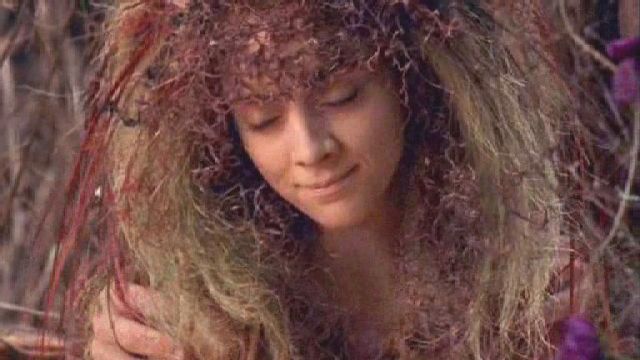
My favorite scene in the whole Stargate series was Lya of "The Nox," like a Spirit Guide, coming to offer wisdom and protection.

Don't let the unsolved hairdos of The Nox fool you. Ultra-sophisticated, The Nox's schtick, just to throw you off, is to pose as primitive forest-dwellers.

But, in fact, they're one of the most advanced civilizations across the cosmos, with not only floating cities but cloaked floating cities.

Lya's pretty good at making a lot of things disappear -- weapons of soldiers, entire spaceships, turning people invisible and transporting them; and she'll help anyone. The Nox live by a strict code of nonviolence. When push-comes-to-shove, however, it's true they will help the "good guys," but, the annoying part is, they'll also help "the bad guys."

Little wonder then that even the battle-hardened Col. Jack O'Neill found himself gushing before the high-order morality and sentience of The Nox: "God, I love those people!"

READ MORE 


Ralph Waldo Emerson: “The foundations of a person are not in matter but in spirit.”

Hui-Hai: “Your treasure house is within; it contains all you'll ever need.”

Douglas MacArthur: “It must be of the spirit if we are to save the flesh.”


Can personal change, human evolvement, be effected by will-power, sheer force of effort, or does it come in a natural way, like the effortless germination of a seed that naturally blossoms?

I’ve discovered a contradiction in my writings.

Sometimes I’ve said that human development is like a weight-lifter developing muscle by exertion. There seems to be a “potential benefit in pushing back against the difficulties of this world.” For a very long time, people have called this “character-building.”

But I also frequently say that the perfection of the human spirit “is not obtained by trying very hard, by religious rituals, prayer, fasting, vow, or pilgrimage - but simply by quietly observing the inner disorder.” The developing human potential “is like planting an acorn; within, lies dormant a towering, mighty oak.”

Both of these views have merit. How can we reconcile this apparent paradox?

READ MORE 


Fyodor Dostoyevsky: “Love the animals, love the plants, love everything. If you love everything, you will perceive the divine mystery in things. Once you perceive it, you will begin to comprehend it better every day. And you will come at last to love the whole world with an all-embracing love.”


from the book, “The Power Of Myth,”
a discussion with Dr. Joseph Campbell 


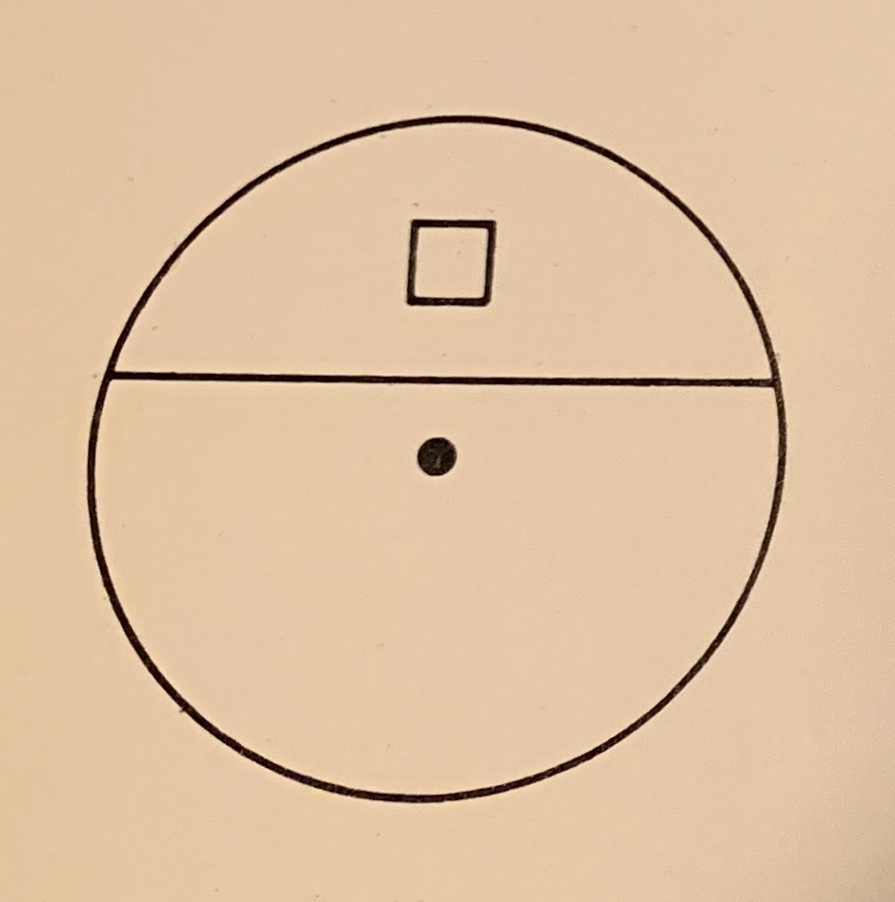
Moyers: I remember a lecture in which you drew a circle, and you said, "That's your soul."

Campbell: Well, that was simply a pedagogical stunt. Plato said somewhere that the soul is a circle. I took this idea to suggest on the blackboard the whole sphere of the psyche. Then I drew a horizontal line across the circle to represent the line of separation of the conscious and unconscious. The center from which all our energy comes I represented as a dot in the center of the circle, below the horizontal line… Now, above the horizontal line there is the ego, which I represent as a square: that aspect of our consciousness that we identify as our center. But, you see, it’s very much off center. We think that this is what’s running the show, but it isn’t.

Moyers: What’s running the show?

Campbell: What’s running the show is what’s coming up from way down below…


Ralph Waldo Emerson: “We ask for long life, but 'tis deep life, or noble moments that signify. Let the measure of time be spiritual, not mechanical.”

Walt Whitman: “In the faces of men and women I see God.”

Henry David Thoreau: “Live your beliefs and you can turn the world around.”


'everyone’s a murderer', you just need the right circumstance

Jonathan Beecher, No One’s Dead:

“I remember watching a TV series called ‘Inside Man.’ It’s about a convicted serial killer on death row who helps solve crimes from his prison cell in a bid to atone for his own. During one episode, the governor of the prison asks the protagonist, Jefferson Grieff—who’s a likable character—why he kills people. Everyone’s a murderer, he replies, you just have to meet the right person.”

In the WG writings exploring the anatomy of spirituality, it’s often stated that, in the unenlightened state, all human beings – if sufficiently taken to darkness, under enough provocation, when the spirit of cultism deludes, or if expediency believes that one might get away with it – then, one can slip over the line and commit any barbarity of history.

It’s an uncomfortable realization, but the death-row prisoner is actually correct: with the right circumstances, “everyone’s a murderer.”

We don’t like this proposition. We’d rather cajole ourselves to assert, “If we could only get rid of the bad guys, those of the other political party, the ones causing all the trouble, then life would be good for all of us good guys.” It is a pleasant fiction.

We cannot attain to substantial spiritual growth and maturity until we, individually, plumb the depths of one’s own “heart of darkness.”

Each of us harbors incredible and awesome human potential, knowing no “discernible upper limit,” but we also secret an element within designed to make us autonomous persons.

In our immature state, this dysfunctional ego, if we fail to remain present to “the light within,” might potentially lead us to all manner of wayward thought and action. This means you and me.

Dr. Carl Jung: “Knowing your own darkness is the best method for dealing with the darkness of other people. One does not become enlightened by imagining figures of light, but by making the darkness conscious. The most terrifying thing is to accept oneself completely. Your visions will become clear only when you can look into your own heart. Who looks outside, dreams; who looks inside, awakes.”

Editor's note: Jung, in his own words, expresses Jesus' teaching of "first remove the beam in your own eye, and then you will see clearly to remove the speck in your brother's eye."


Buddha: “Just as a candle cannot burn without fire, men cannot live without a spiritual life.”

Teilhard de Chardin: “You are not a human being in search of a spiritual experience. You are a spiritual being immersed in a human experience.”


The Dazzling Darkness is a concept representing a frame of mind untrammeled by the dysfunctional ego. Therein, freed from base-alloy lower-nature inclinations, one might apprehend not only the identity of one’s true mate but also a realization of the living presence of God in one’s life. READ MORE


Aquinas: “Man cannot live without joy; therefore when he is deprived of true spiritual joys it is necessary that he become addicted to carnal pleasures.”

Balzac: “The smallest flower is a thought, a life answering to some feature of the Great Whole, of whom they have a persistent intuition.”

Chesterton: “Coincidences are spiritual puns.”

Denis Waitley: “Happiness cannot be traveled to, owned, earned, worn or consumed. Happiness is the spiritual experience of living every minute with love, grace and gratitude.”


The following is reprinted from the "afterlife #31.stead" page

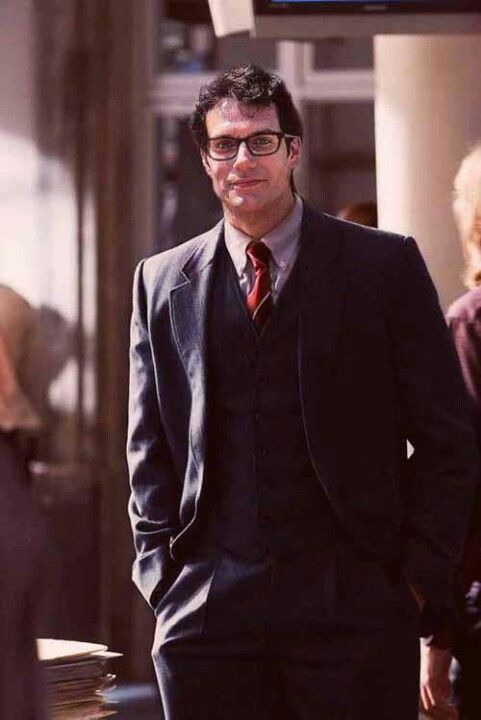
he's smiling, looks mild-mannered enough, but do not be deceived

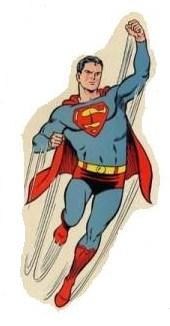
In the movie Man Of Steel, Clark’s mother asks him: “What are you going to do when you're not saving the world?”

We would bring to the attention of the “insane 500” teachers what he did not say. He did not say,

“I’m going to spend my time far away, in my aloof Fortress Of Solitude. I must do this, of course, as it's much too appalling distasteful to mingle with the weakling-rabble on the streets. Securing for myself, evolved person as I am, a circumscribed and sequestered residence is but right and proper. One of my noble rank ought to live in a manner commensurate with high standing. I will, however, on rare occasion, deign to make appearance in the world of mere mortals. They will benefit by my pearls of wisdom as I lecture that they needn’t bother attempting to scrutinize life on a high plane; my ways are past finding out for plebeians. After all, I really know, because I'm here, and you are not - and that's all you need to know.”

But this is how Clark did respond to his mother:

“I gotta find a job, where I can keep my ear to the ground; where people won't look twice when I want to go somewhere dangerous and start asking questions.”

Allow me to paraphrase and offer the sense of Clark’s remarks:

“I want to live a life of service and help where I can. Yes, I have abilities, but I don’t want this to be a barrier. I want to live among the people in a nondescript way. I don’t want to attract attention to myself. I want to be ready and easily available, to help anyone in an expedited manner when opportunity arises.”

There are advanced Spirit Guides, far more powerful than Superman, who live this kind of quiet and unassuming life in Summerland. They may appear to be "meek and mild-mannered" as Clark, but let us not be deceived concerning their potentially world-shattering abilities.

On the Word Gems homepage I spoke of Kierkegaard's "knight of faith." Those identified with such make a home among the people, as a friend and neighbor, so as to be available to those willing to be aided. This is the unpretentious, unaffected, unambitious mind of God, on display and in action.

See the “afterlife #31 main-page” and the "Summerland 1.minute” writings for testimonies from and about these self-effacing servants who live as “ordinary” citizens in Summerland; in residence, in some cases, for thousands of years, with no egoic craving to “move up the ladder to the seventh heaven.” Also see this article, from the missionary work of Franchezzo, on the “super-powers” of the advanced Guides.


We might fantasize ourselves, someday, in the next world, assuming the role of a super-hero; however, living as Clark Kent might be the more advanced modus vivendi.

Our materialistic society values a spirit of competition, someone who can “win” and be “number one.” Nothing wrong with winning and, if appropriate, being number one, but, if that’s all you have, then, as Art Mokarow used to say to us ministerial students, “there’s something wrong with you.”

We extol Superman, and rightly so, for all of his man-of-action virtues, but, let’s think about it, Clark, in his own way, was a true man of strength. He knew himself, on the deep inside, well enough, such that he didn’t have to prove himself as the macho-man at every turn. He allowed others to think that he was overly "meek and mild-mannered" if it served a greater good. This non-flashiness would have been even tuffer for Clark as Superboy, not being able to play sports and impress the girls.

We are reminded of Eckhart Tolle’s excellent discourse:

what looks like weakness is the only true strength

"Instead of trying to be the mountain, teaches the ancient Tao Te Ching, 'Be the valley of the universe.' In this way you are restored to wholeness and so 'All things will come to you'."

can you be content quietly living as a 'nobody', true to yourself, until your own burgeoning competence unavoidably elevates you


READ MORE of Eckhart's insightful discussion on the "evil" page.


Dalai Lama: “The universe is a single atom: the convergence of science and spirituality.”

Ralph Waldo Emerson: “Spiritual force is stronger than material force; thoughts rule the world.”

Buddha: “Just as a candle cannot burn without fire, men cannot live without a spiritual life.”


the tiresome predictability of evil

Will and Ariel Durant: "We shall not follow the record of his [Ptolemy III] wars, for though there is drama in the details of strife, there is a dreary eternity in its causes and results; such history becomes a menial attendance upon the vicissitudes of power, in which victories and defeats cancel one another into a resounding zero."

Kairissi. This is a profound insight by the Durants, who spent many decades surveying world history.

Elenchus. “Dreary eternity.” Somewhere in their writings they also said, to the effect, history is one long reiteration of rise and fall: of conquest, overreach, internal decay, and collapse. Even Professor Unwin called it "monotonous."

K. This bleak and desolate wasteland of the insane ego stands in sharp contrast to the scintillating effulgence of the enlightened spiritual mind.

E. Are we able to state a general rule here?

one-trick pony, one-phrase parrot

K. I think we can. The ways of evil are pedestrian, boring, predictable with all the imagination of a tenured bureaucrat. Evil is like a one-trick pony, like a one-phrase parrot. As we study the ways of evil, I would defy anyone to countermand the following modus operandi: Evil, without fail, ever employs the warn-out tools of either brutality or deception, depending on what it thinks it can get away with at the moment. Evil can’t think outside the box. Though there is plenty of "drama in the details," as the Durants sighed, nothing ever changes. And it always has one fundamental goal: “more.” It needs more to fill up its sense of “I don’t have enough” because “I am not enough.” To accomplish its sordid objective, it must “take.” Victims tend not to cooperate. To overcome this annoying non-compliance, evil must either pilfer by force or by seduction. There is no other way forward for evil.

E. And the enlightened spiritual mind?

a living thing, pulsating with vitality

K. It doesn’t read from a play-book or preprogrammed script. It seeks to work in “the harvest fields of God.” But, to this end, one might say, it awaits instructions. The spiritual mind learns how to “open a channel” to receive insights and directives from Spirit concerning where and what it might contribute. Life in the spirit is a living thing, pulsating with vitality, a creative process – see the many examples on the “creativity” page – it’s different for each person, and it might be a little different even for the same person on a day-to-day basis. Each day, indeed, several times a day, the spiritual mind will receive flash-insights and presentiments concerning one’s assigned duties. Unlike the way of evil, which is banal and paint-by-numbers, the enlightened person, over time, enjoys a splendiferous life of ever-expanding vistas of new perceptions, dazzling wisdom, and augmented well-being.

E. I’m reminded of something, and I’d like your comment. Tolstoy said:

All happy families resemble one another, each unhappy family is unhappy in its own way.”

Does this contradict your general rule?

they're all unhappy in the same way, and for the same reason

K. His statement is open to interpretation, depending on what we emphasize or how we define. However, to address your implied meaning, I think maybe Tolstoy has it wrong. All unhappy families are unhappy in the same way. They’re unhappy because they (1) got what they wanted, or (2) didn’t get what they wanted – either way, they’re unhappy because the ego always wants “more.” It’s never satisfied. And now they’re blaming each other for their unhappiness. This is an old story, playing out, in the same way, in millions of families across the globe.

E. Contrast this with a spiritually minded family.

a happiness based on the individualized success of each unique family member 

K. They’re not materialistic. They’re not insane for "more" and are happy with what they have until they can improve their lot in life. And most of all, they’re happy with each other, are supportive of each other, and see, and encourage, the awesome untapped human potential in each family member. Each of them, as we all do, harbors a unique set of talents and abilities, and therefore each is shepherded toward a unique fulfillment. There is no one-size-fits-all in their interactions. No banality, no predictability. Each family member is cherished and dealt with as a one-in-the-universe individual. They rejoice in each other’s successes, and cheer each other on.

E. I wish I could belong to a family like that.

K. Why don’t we, someday, create one in Summerland?


George Bernard Shaw: “The English are not spiritual people, so they invented cricket to give them some idea of eternity.”

M. Scott Peck: “The great awareness comes slowly, piece by piece. The path of spiritual growth is a path of lifelong learning. The experience of spiritual power is basically a joyful one.”


Editor's last word: